Last night was a doozy in that I was up most of the night with reflux like I have rarely had in my life. Fortunately in our room, we had the tail end of the baguette that we bought in Anchorage the day we drove to Homer. At various periods during the night, I ate small bites of that and sipped water to help keep the acid at bay. Sleep was not possible.
When I finally gave up on trying to sleep and rolled out of bed, I found out that I had an easier night than Michael, who went to the ER because his GI symptoms mimicked a heart attack. I know exactly this feeling. Man, this getting older stuff is not something they tell you about when you're younger. Anyway, I feel like hell and it's just going to be a day to get through. Fortunately, it is not a day of big plans, just a short 10-mile walk the length of the Homer Spit and back.
The Homer Spit is a 4.5-mile finger of land running northwest to southeast that juts straight out halfway into 9-mile-wide Kachemak Bay. Cook Inlet opens to the southwest (the ocean side) and Kachemak Bay (the bay side) runs to the northeast of the Spit. Rising on average 19 feet above the water, the Spit ranges in width from just over quarter-mile to just barely enough room for the roadway. Before the 1964 earthquake, there was some larger vegetation on the Spit, but now it's primarily just gravel and sand.
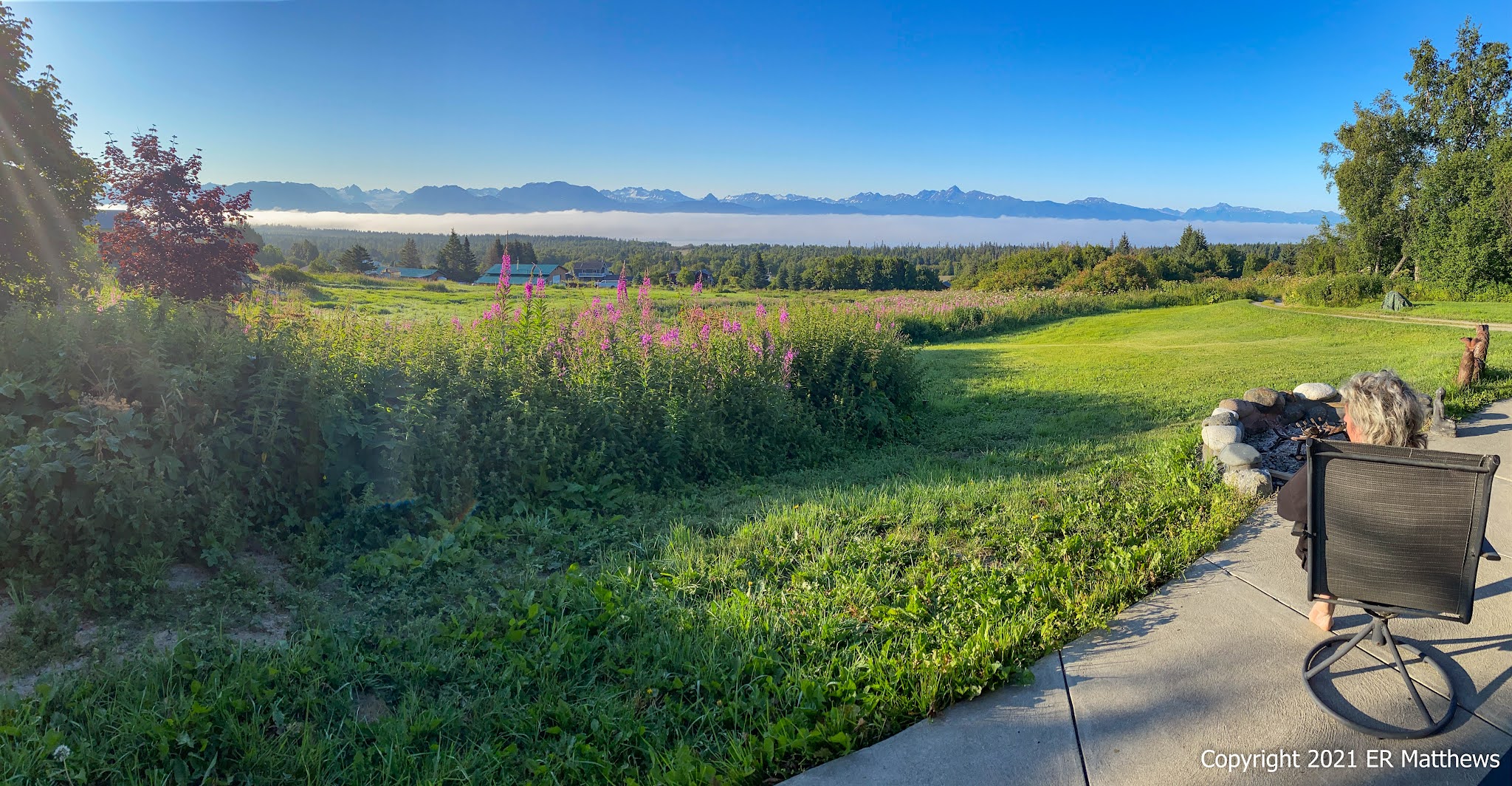
Because of the narrow beaches hard against rip-rap on the ocean side, we had to wait until late morning for the tide to turn to walk on the exposed beach, so we sat out on the patio listening to the sandhill cranes trumpeting and looking at the stunning mountain view across the bay. Annie had her coffee but I couldn't stomach it.
 |
| Bagel with Lox with a View |
Late morning on the way to the Spit, we stopped at The Bagel Shop where we both got bagels with lox. They weren't gold standard New York bagels, but they were better than average and were some of the best food we would eat in Homer, sad as that is to say. The little shop in an industrial area east of town had a long queue out the door. Because of COVID, all orders are to go and we took ours down to the beginning of the Spit where we ate them on a picnic table on the ocean side.
All alone on the beach covered in small, well-rounded pebbles and stones, our plan was to walk the length of the Spit on the ocean side. Walking the bay side would be impossible along the shore because that's the protected side where the boats enter the harbors, including the deep-water harbor near the end of the Spit. Alas our timing was off and despite the ebbing tide, there was still a quarter-mile stretch where the water came right to the rip-rap bolstering the side of the roadway.
Ann’s confidence in navigating rip-rap and scree fields is slim. So, we put plan B in motion, carefully climbing through the giant rocks to the highway above. On the bay side of the highway, a paved bike path runs the entire length of the Spit. We crossed to the bike path and continued our trek alongside the highway, trading the solitude of the beach walk for a schlep through all the touristy bits of the Spit, dodging children, dogs, and bikes for much of the way.
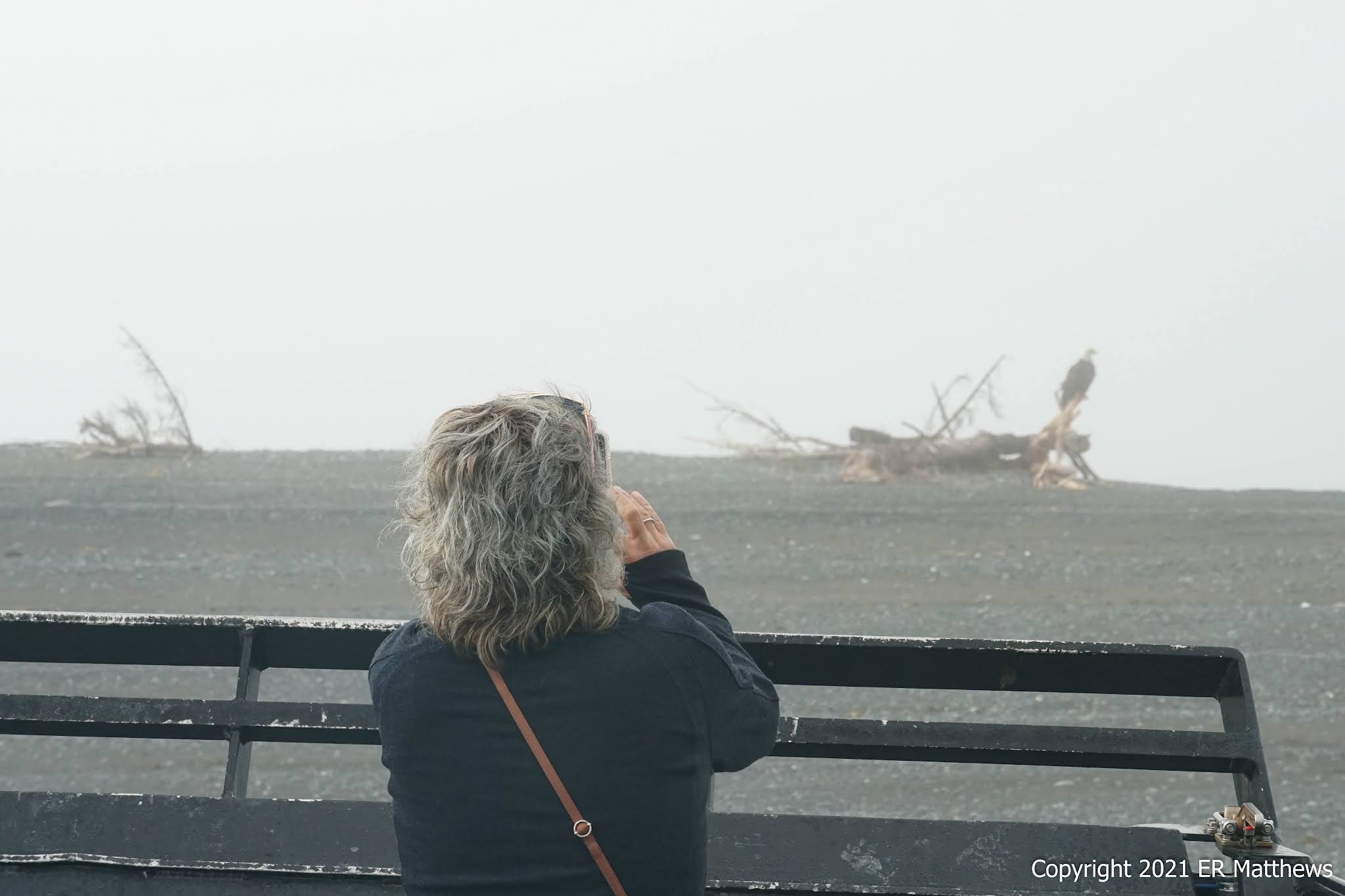
Before we left the beach, a bald eagle took off from the sand. It’s sheer size prompted Ann to quip, “Is that a prop jet?” We would see a lot of eagles during our stay, but honestly, I was expecting to see more of them. Michael said several times that eagles in Homer are as common as pigeons elsewhere. I'm sure there are more eagles to see in the winter when they congregate, not being busy off raising babies.
During our outbound tour of the Spit, we walked past abandoned boats, the ice rink, a fishing lagoon, boat storage, campgrounds, a drydock facility, lots of tourist-focused businesses such as art galleries and fishing charter operations, the harbor, and a fish processing complex before going down to the beach on the bay side once again just past the Alaska Marine Highway System ferry terminal. Businesses are clumped together in pods along the Spit with the businesses on the ocean side up on a boardwalk above the beach.
 |
| Starting Our Beach Walk with Quite a View |
 |
| The Only Two Loons, Gavia immer, I Saw in Alaska |
 |
| Is This Not a Stunning View? |
 |
Boreal Yarrow, Achillea millefolium v. borealis, and
Beach Fleabane, Senecio pseudo-arnica |
 |
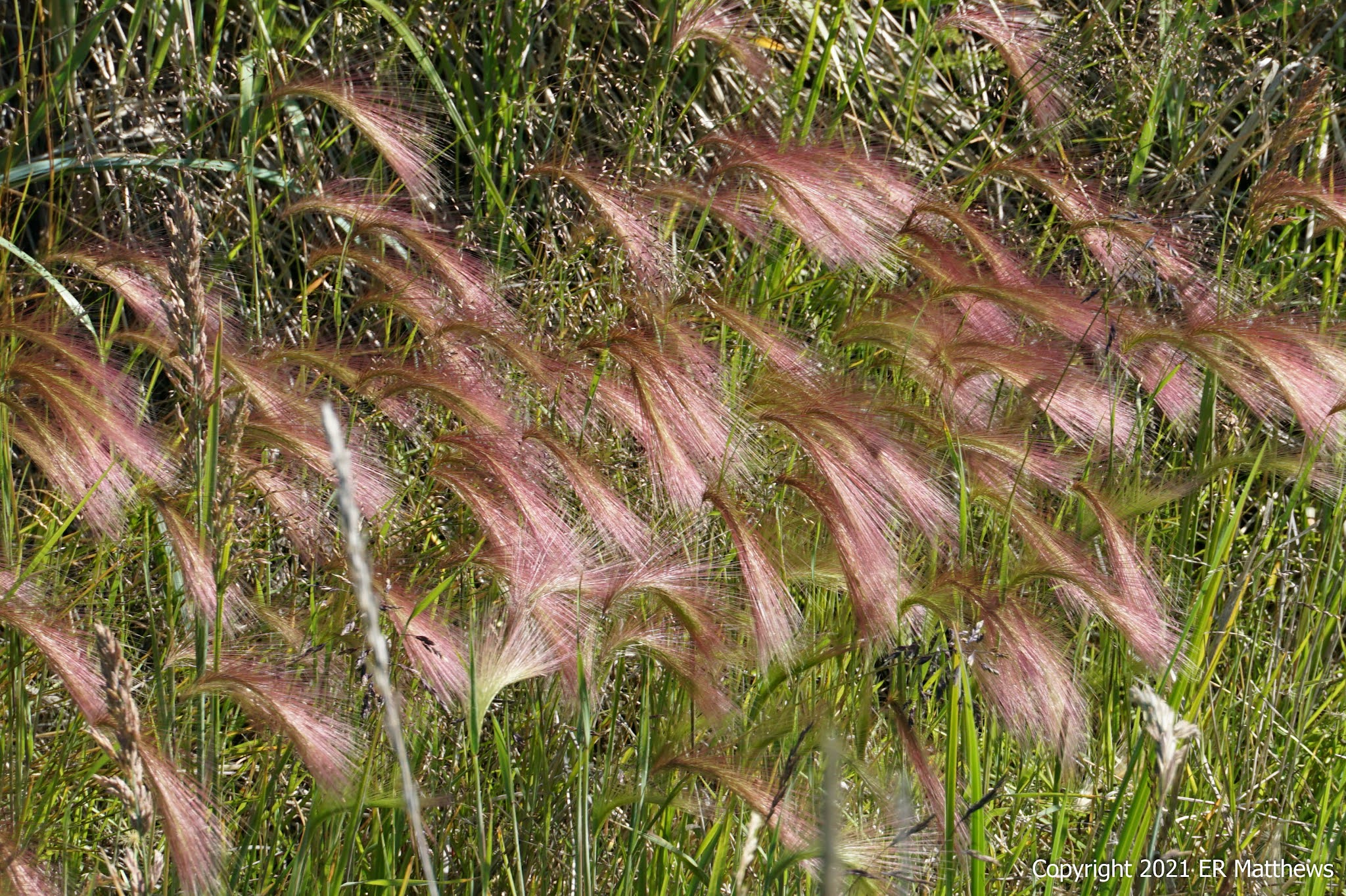
| Pink Foxtail Barley, Hordeum jubatum |
 |
| Fishing for Salmon at Entry to Fishing Lagoon |
 |
| Where I Filleted Salmon Yesterday |
 |
| Homer Harbor with Stunning Glacier Backdrop |
After Homer Harbor, we made a 180 following the beach around from the bay side back to the ocean/Cook Inlet side, passing the Land's End Resort, and stopping at the iconic Seafarer’s Memorial for a few minutes. The memorial honors those who have been lost at sea and underscores the importance of the fishing industry to this region.
 |
| Seafarer's Memorial |
 |
| Bell at the Memorial |
From the end of the Spit, we retraced our steps back to the car, which feeling as miserable as I was from last night's GI pyrotechnics, I never thought we would reach. The walk back was a real trudge despite being flat and paved; I was out of gas.
The car was a welcome site. Ann wanted to go out for a late lunch/early dinner, but the only thing keeping me going was the thought of bed and a long nap.
After a decent snooze, I was feeling a little better, but still not great. Ann wanted to go out for dinner but I didn’t feel I could stomach food. Mike offered a glass of wine while we sat outside and watched the bird activity pick up in the late afternoon. I passed on the wine, not wanting to pour gasoline onto the fire that was my stomach.
In the golden rays of late afternoon sun, we watched the goldfinches eating cow parsnip seeds just off the patio, while flycatchers worked from the taller shrubs. A bald eagle circled in close over where we were sitting, above the cranes which were busy feeding and trumpeting in the meadow. It was a really relaxing scenario and just what the doctor ordered for me.
 |
| Flycatcher Posing in a Red Elderberry |
Ann asked me to take her on a beer run so we went part way into town to the liquor store. Back at the inn, she enjoyed a couple cold IPAs while we talked with Mike and ate the remainder of our sandwiches from yesterday's lunch.
Mike and I having been up the night before, we decided to head to bed around 7:15. I fell asleep around 10, only to be awakened at 11:20 by other noisy guests who managed to get themselves locked out. I got up to let them in before they woke anyone else and finally crashed out for a decent night's sleep.