Showing posts with label tomatillos. Show all posts

Wednesday, July 16, 2025

Dimitri Comes to Bend

Surprise! Our friend Dimitri texted out of the blue on Monday that he and his friend Joe would be in Bend for the weekend. Dimitri still lives in Northern Virginia just outside of DC, so he was not on our bingo card for weekend visitors. He and Joe, a friend currently from Virginia but from Portland in the past, were flying into PDX. After visiting Oregon wine country and exploring Portland, they would be driving to Bend for a long weekend.

Mediterranean Crew: Greek, Italian, Italian
Dimitri and Joe had plans to dine out on Saturday at the same time we were at the Trevor Noah show at the amphitheater, so we set a get-together for Sunday starting with pre-game at Viaggio Wine Bar. We met them there after they returned from a day trip to Crater Lake, which if you have never seen before like Dimitri, I guess you have to see. But honestly, battling buses of tourists is not my thing and I would have preferred to visit Paulina Lake instead.

Dimitri and Joe are fellow winos, so we thought that a visit to Viaggio would be welcome. There, they could drool over the curated selection of bottles on the shelves and Coravin selections on the glass list. Where else can you find shelves full of Wachau and Kamptal Riesling, Piemonte wines of all sorts, or Rhônes for days? Maybe in large cities, but in the small city of Bend three hours in any direction from civilization, the selection at Viaggio is miraculous.

After a bottle of Pibarnon Bandol rosé, we drove to the house where all I had to do was assemble dinner. In planning dinner, I wanted something that I could put on the table with little to no effort. Gone are the days of à la minute cooking where cooking is the focus rather than our guests. Hence our menu of chips and salsa verde, enchiladas de carne adovada, and posole amarillo with bacon, corn, and green chiles. Ann made another summer berry and brioche pudding and I had plenty of lemon-thyme sorbet base in the fridge ready to go into the freezer.

How I arrived at this menu is anyone's guess. I was definitely looking for a slow-cooker meal that would not involve a lot of active cooking on my part. Probably in the back of my mind was the kilo of Chimayo chile that I scored in New Mexico in December. And then, I found some really good looking pork shoulder at the store. Also, who does not like enchiladas? Chips and salsa as well as posole are natural companions to carne adovada, so that part of the menu should not be a surprise.

Before we get into dinner however, Dimitri came bearing a gift, a 2014 Glen Manor Petit Verdot. I texted Jeff, "A friend showed up with a bottle of this," to which he replied, "Keep that friend!" I remember this wine. I believe I did a pairing for it for a barrel tasting. I could be wrong; 2015 was a hot minute ago.

Dimitri Brought Us a Gift
Chips and Charred Jalapeño Salsa Verde
My usual salsa verde is tomatillos (large can, drained), cilantro (one bunch), garlic (4 cloves), and a serrano chile. When I am lazy, I used canned tomatillos rather than roasting fresh ones. I am often lazy these days. I wanted to change it up a bit with some smokiness, so I charred two jalapeños and used them instead of the serrano. I also threw in an avocado and a pinch of smoked paprika for added smoke.

It was good, but next time, I want it smokier. Maybe I try using a charred poblano. Definitely will char fresh tomatillos on the next iteration. It will be a fun experiment. A batch of salsa verde or chimichurri is usually in our refrigerator: we eat a lot of vegetarian and fish tacos that benefit from salsa.

Saturday, I made a batch of slow cooker carne adovada. Like most dishes, I used no recipe for this super simple stew. I started by cutting the pork shoulder into large cubes, then browning one side of the cubes, followed by transferring them to the slow cooker as each batch browned. I want the flavor that browning creates, but I find that browning all sides of the meat tends to contribute to dryness. Browning one large side of the pork chunks suffices to yield both flavor and succulence.

After the meat was all browned, I added a diced onion to the pork pan along with call it a dozen minced cloves of garlic. Once the onions cooked, I added a a bit of Mexican oregano, rubbed between my palms into a powder, a lot of spicy ground Chimayo chile, and a lesser amount of ancho powder to add some balance to the Chimayo chile. The chile was probably a cup in total, 3/4 Chimayo and 1/4 ancho. After stirring this into the onions well, I added perhaps a couple cups of water, a splash of Sherry vinegar, and a small amount, perhaps a tablespoon, of agave nectar. Once this sauce came together, I poured it over the pork, stirred well, and put the slow cooker on.

I believe that adovada must have acidity; your grandmother may disagree as is her right. Not a lot of acidity, but some. So I always put a bit of vinegar in mine (as I do my Mexican-style chorizo). I also think that spicy Chimayo chile needs just a hint (below the taste threshold) of sweet to help mellow it, hence the agave.

When the pork was cooked, some six or seven hours later, I separated the liquid from the pork. I separated the meat and the cooking liquid for several reasons. With the liquid chilled, I could peel off the layer of pork fat that I did not want in my sauce (and use it to cook anything else; who does not love chile-flavored lard?). Because I was making enchiladas, I wanted a more solid filling that would not bleed through the tortillas. And, I wanted a thicker, more intense sauce to fold into the filling and to cover the tops of the enchiladas.

After defatting the cooking liquid, I reduced it as far as I could without it becoming too salty. I salted the pork cubes during browning. But it was a really mellow thin sauce after hours of braising and I wanted a thicker, more in-your-face chile sauce for the enchiladas. I made a quick paste of a tablespoon of flour (for thickening), half a cup of Chimayo chile, and a little of the reduced braising liquid. After stirring really well to remove all lumps, I stirred this slurry into the sauce and cooked it gently to thicken.

Enchilada Sauce, Thickened with Flour and Chimayo Chile
Once we got back to the house, assembly of the enchiladas was trivial. I mixed some of the carne adovada with some of the sauce and the meat shredded as I stirred it. After seasoning it to taste, I rolled the tortillas around this filling, placing them in an oiled half hotel pan, seam side down.

I digress, but this is my blog, so I will digress if I want to. When I retired from the restaurant, I kept one of the half hotel pans for my home kitchen. If you have worked in food service and are of a certain age, you will remember that hotel pans used to be thick and heavy, not thin and flimsy as they are today. I kept one of the old school thick pans for home use and I use it often. I had some really awesome hotel pans too, but they are far too large for home cooking.

I spooned more sauce over the top of the rolled tortillas to make them into true enchiladas ("sauced with chiles") and then scattered over just a bit of melting cheese. I used mozz, but any melting cheese such as queso chihuahua, queso quesadilla, queso oaxaca, queso asadero, or Monterey Jack would be perfect.

Posole Amarillo with Bacon, Green Chile, and Fresh Corn
I am a huge fan of hominy. I grew up on it, always fried in bacon grease as it is traditionally served in the South. It was good. When I was in grad school in Texas, I learned that the rest of the world does not see the dish the same as I grew up with. Posole is always always a stew with pork, red chile, and white hominy. It was good: I loved this stew at first bite. Then I went to New Mexico and found that they often serve a drier posole as a side dish, more akin to my southern hominy, but with local chiles. It was good. Then I started making casseroles of hominy bound with cream sauce. It too was good. What I figured out is that posole dishes are as numerous and varied as the people that make them. I feel free to riff on this ingredient in any way that seems appropriate to me.

Over the years, I learned that hominy is not always white. It is the color of the corn from which it is made and as we all know, corn comes in many shades: white, yellow, red, and purple. I have used the different colors for effect over the years. I used a lot of maíz morado, purple hominy, at the restaurant. This time, I felt like using yellow hominy.

This time, I fried up some bacon most of the way done, then added diced red onion and garlic and let that cook. Then I added the hominy and diced mild green chile (Anaheims that I torched on my patio). It too was good. I made it Sunday morning and refrigerated it. While the enchiladas were in the oven, I reheated the posole and sliced the kernels off two ears of corn. They went into the dish as a sweet counterpoint to the smoky green chile vibe going on. It was even better.

Enchiladas de Carne Adovada and Posole Amarillo
After dinner, it had cooled off enough to go outside so Ann put the tunes on out on the patio and we all took our dessert, summer berry pudding and lemon-thyme sorbet, outside. I opened a bottle of 1977 Warre's Port, because I save those kinds of wines for fellow winos like Dimitri and Joe. It was a great night!

Dessert on the Patio
Ann's Berry and Brioche Pudding
Lemon-Thyme Sorbet with Summer Berry Pudding

Wednesday, May 21, 2025

A Southwest Dinner

We're getting close to the summer travel season when we are going to be on the road somewhat often. Before we leave for Virginia for my daughter Ellie's wedding, we wanted to have Rob and Dyce over for a casual dinner.

Rob and Dyce Brought the Most Gorgeous Peonies
I really am trying to avoid dinners with lots of last minute cooking so that I can relax and focus on guests. That shifts meals towards braises and dishes without touchy timing. Ann had kindly suggested all manner of dishes, but nothing grabbed me.

Unclear on what to make and rooting through the freezer, I found a bag of cleaned and cubed pork shoulder from a foray to Costco. Their shoulders come in two packs and that's a ton of meat. I typically break down both shoulders into cubes for braises like carnitas and freeze what I don't need right away.

Knowing that Rob and Dyce are fond of New Mexican food had me thinking along those lines and so I decided to make chile verde. After pondering for a few days, I decided to make a posole casserole to accompany the pork, and to offer empanadas for an appetizer. After a week of beautiful weather, it cooled off again and the choice of heartier food seemed lucky and apropos.

Then I remembered the heirloom masa harina that Ann gave me for my birthday and I decided to make tortillas to accompany the meal. And so the menu was set with the only last minute task to cook the tortillas. Somehow in the course of moving, my tortilla press did not make it to this house and so I improvised using a cast iron pan and a cut open Ziploc bag.

Empanadas de Picadillo Dulce, Cilantro Aïoli
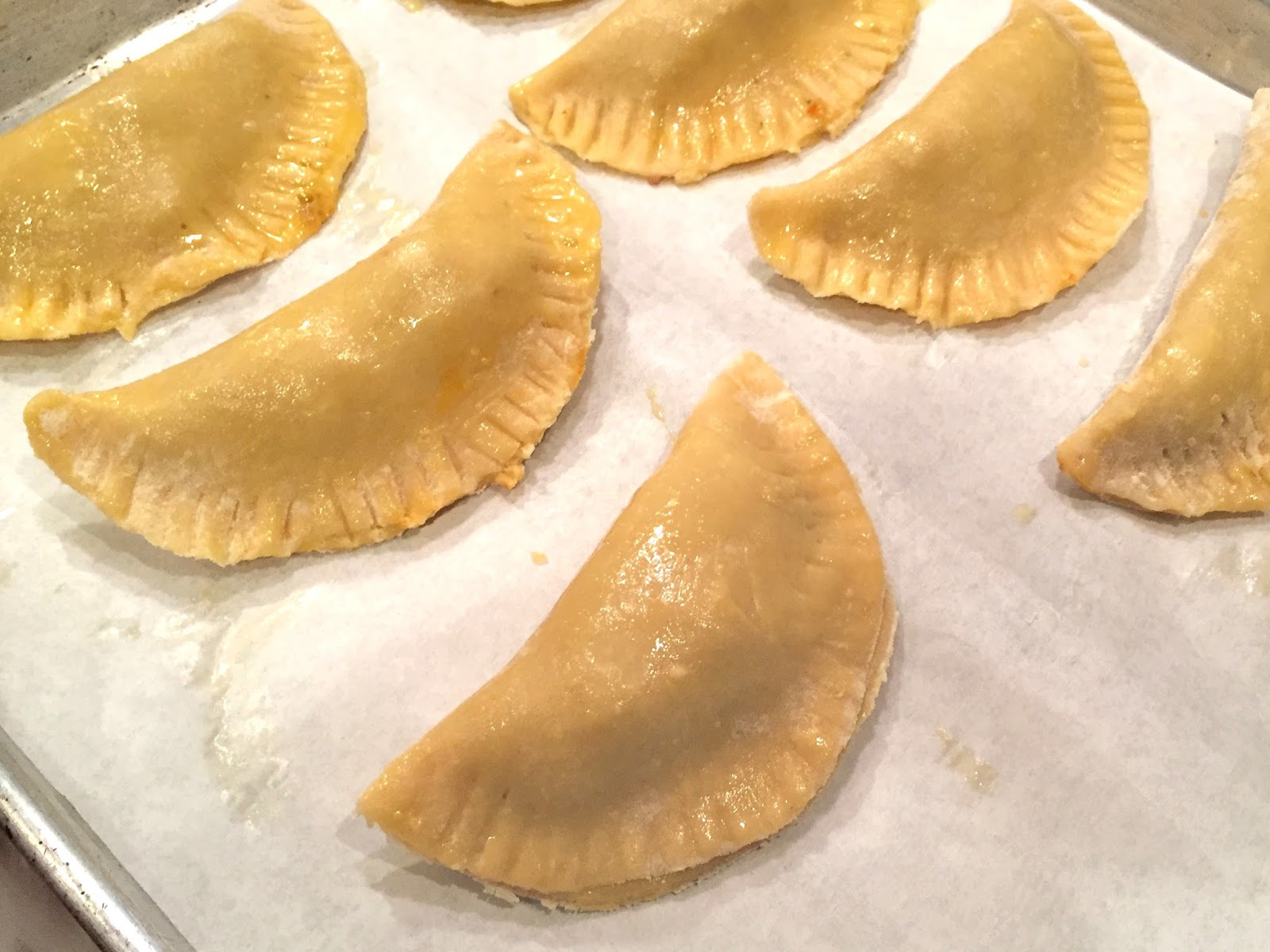
Empanadas I make with an egg-enriched pie crust that never fails to bake up flaky and golden brown especially when brushed with an egg wash. Habitually, I fill empanadas most often with picadillo dulce, a sweet and sour pork that I first learned about by reading old Spanish-language recipes in the Biblioteca Nacional de México.

The filling is clearly of Moorish origin, containing almonds, olives, and sometimes raisins, though I have made it my own through the years. This version was ground pork shoulder, almonds, olives, onion, poblano chile, garlic, Mexican oregano, and three types of dried red chile (the majority ancho). I made it sweet and sour with brown sugar and Sherry vinegar. I have outlined the process in a previous post.

Masa Balls for Tortillas
Ghetto Tortilla Press: My 1930's Griswold Skillet
Tortillas on the Table
Chile Verde, Posole-Chipotle Casserole, Tortillas
Chile verde is not a recipe but an idea. At essence, it is cubes of pork braised in a salsa verde. There are as many ways to make it as there are cooks and they are all wonderful. I am certain that I make it differently each time and this time, I used the slow cooker to free our single oven to use in baking the posole.

For chile verde, there are two essential steps. First, make a salsa verde and second, brown the meat and braise it in the salsa.

For salsa verde, I roasted at high temperature (say 400F) a sheet tray of poblano peppers, Anaheim peppers, onions, garlic, and tomatillos. I rotated the chiles as each side became blistered. Once done, I pulled the tray out and covered it in film so that the veg could steam until cool and loosen the pepper skins.

Next up, I skinned and cleaned the peppers, dicing and reserving three or four Anaheims for the posole casserole. The peppers, garlic, tomatillos, onion, and a bunch of fresh cilantro went into the food processor. I blended it until roughly smooth and put it in the slow cooker.

For the pork, in recent years, I have adopted a process by which I only brown one surface of the cubes. This provides great flavor while not drying out the pork. After browning all the pork and putting it in the food processor, I deglazed the pan with a splash of water and poured all the porky goodness into the slow cooker with the pork and salsa. Eight hours later, the pork was tender and the sauce reduced to just the right thickness.

The posole casserole, something I started making in my 20s as a broke graduate student, I assembled in the afternoon and put into at 350F oven about 90 minutes before we were ready to eat. Timing is not critical, a delightfully brown crust is.

I admit that I did not make my own posole, though I could. I bought two 28-ounce cans of commercial hominy, the same Teasdale brand that I used in the restaurant. One can each of yellow and white hominy went into a mixing bowl with the reserved chopped green chiles, half a bunch of sliced green onions, and the kernels of one ear of fresh sweet corn for contrast and variation on the corn theme. Purple hominy (maíz morado) would have been cool, but my store had none.

I bound the casserole with a chipotle béchamel: olive oil and a spoon of flour cooked for a minute, then a pinch of salt and one finely chopped chipotle in adobo. After mixing the hominy and sauce, I adjusted the salt and put it into an oiled baking dish and topped it with a little grated white cheese. The result is as delicious as it is simple.

Making tortillas with modern masa harina is a trivial process of mixing the corn flour with enough water to make a workable dough. Then you roll it into balls and smash the balls between sheets of plastic (or a cut open Ziploc freezer bag in my case) in a tortilla press (or beneath a cast iron skillet in my case). We restaurant chefs are used to adapting and overcoming: no tortilla press, no problem. I can even patty them by hand, old school.

After peeling the masa circle off the plastic, it goes into a hot, dry frying pan on low to medium heat. Cooking both sides takes less than a minute and if I had a flat-top, I could have cooked them all at once rather than one at a time. Naturally, I could have fired four pans on the stove and cooked four at a time, but no matter. We were all busy yakking while I was pressing and cooking tortillas.

It should be axiomatic that a tortilla is only as good as the masa from which it is made. And if you use shitty Maseca or Masa Brosa, you are going to get a shitty tortilla. My masa is from Masienda and is processed from heirloom corn varieties grown on small farms in Mexico. It is expensive relative to the big brands (but even so, tortillas cost cents), but it helps sustain small farmers and preserve heirloom corn varieties.

Friday, March 18, 2022

Recipe: Roasted Potatoes and Asparagus with Salsa Verde

Roasted Potatoes and Asparagus with Salsa Verde

The other day, our store had a big bag of small potatoes on special and we brought one home along with a bundle of asparagus whose price has plummeted with the arrival of spring in a lot of parts of this hemisphere, here excepted. We won't see spring temperatures for a few weeks, but a guy can live vicariously via the produce in the stores, can he not?

I ended up roasting one sheet tray of asparagus and another of the baby potatoes, then mixed the asparagus with some of the potatoes for our dinner. We liked the combination so much that I decided to do it again.

But meanwhile, leftover from this dinner was a small container of roasted potatoes and being a hungry guy, I pulled them out of the fridge for my lunch. Right next to them was a container of recently made salsa verde and I thought, "Self, wouldn't these two be good together?" And I put them together and they were good and I filed that note away for our next roasted potato and asparagus dinner.

And that brings us to dinner last evening, pictured above. While the potatoes and asparagus roasted, I made a batch each of salsa verde and another of my pimentón (smoked paprika) sauce, recipes below. This salsa verde is a new sauce that I started making in the last year; the pimentón sauce, I've been making since before opening the restaurant, some 20-plus years ago.

The combination of vegetables with the bright and spicy green sauce contrasted with the rich and smoky orange paprika sauce was as good as I had imagined it would be. And it made a fantastic dinner on a cold March night, warm, comforting, spicy, smoky, low calorie, lowish fat, and most importantly, delicious.

Recipe: Roasted Potatoes and Asparagus with Salsa Verde

You don't need a formal recipe or fixed amounts to serve this dinner. For entrée-sized portions, for every two people, start with a pound and a half each of baby waxy potatoes and asparagus. This would also make a wonderful side for a grilled steak, in which case, this amount would likely serve four people.

1.5 pounds small waxy potatoes
1.5 pounds asparagus
olive oil
salt and pepper
1/2 cup salsa verde
2 tablespoons pimentón sauce

Preheat your oven to hot, about 400F. Toss the potatoes with olive oil, salt, and pepper and put on a sheet tray. Break off the tough ends of the asparagus and cut the remaining tender stalks to serving size; I cut each stalk into three pieces. Toss with olive oil, salt, and pepper and put on another sheet tray. Place the two sheet trays in the oven and roast the vegetables until done. The asparagus will likely take 20-25 minutes while the potatoes, depending on size, will take 35-45 minutes.

Combine the roasted vegetables with the half cup of salsa verde and toss well. Divide into two serving bowls and drizzle with the pimentón sauce.

Recipe: Salsa Verde

This is a recipe that I have published before, but it's a short one and easier to include it here than to go and chase it down. I mainly like to use fresh vegetables versus canned ones, but this sauce is a great use for canned tomatillos because it avoids you having to cook the tomatillos before making the salsa.

I specify serrano chile in the recipe simply because it is a reliably spicy chile that is available everywhere all year round. In practice, I make the sauce with whatever spicy green chile I happen to have. Last year, it was most frequently Sugar Rush Peach peppers because a friend gave me a plant.

You'll need a good blender to make this sauce. Here's a plug for my venerable VitaMix, veteran of the restaurant kitchen. At one point, we had five of them between the kitchen and the bar at the restaurant. And we probably went through about a dozen of them total over the 15-year life of the restaurant. 

1 28-ounce can whole tomatillos, drained
2-3 large cloves garlic
1 serrano chile, sliced
1 bunch cilantro, roughly chopped
1/2 teaspoon Kosher salt (to taste)

Place all the ingredients in the blender and starting on low speed, gradually increasing the speed as the ingredients liquefy, blend until you achieve a smooth sauce. Season to taste with additional salt, if necessary. Will keep, tightly covered under refrigeration, about a week.

Recipe: Pimentón Sauce

This sauce is such a good flavor enhancer and color booster for a dish that we used to make it by the gallon at the restaurant, about a week's supply. Quantities are approximate in that I never measure exactly. Quality matters: use a great brand of real Pimentón de la Vera from Spain, not some knock-off. And restraint matters: pimentón gets really bitter when used in large amounts, so go easy until you get a feel for how you like it. The following recipe yields about a cup of sauce.

1/2 cup mayonnaise
1 tablespoon Pimentón de la Vera
1/2 cup water
salt to taste

Start by putting the mayonnaise in a bowl and sprinkling the pimentón and a dash of salt over it. Mix thoroughly with a spoon, pressing the pimentón against the bowl as needed to remove any lumps. Mix until the paste is evenly colored throughout. Add water in small amounts, mixing it in well before adding more. Thin the sauce to the consistency that you desire. Season with salt as necessary. Store under refrigeration almost indefinitely. I typically load the sauce into a squirt bottle to make garnishing easy.

Wednesday, December 9, 2020

Chile Verde con Calabaza

It's not a big secret that I love poblano peppers, the large dark green mild chiles from central Mexico, now grown all over and available in most American grocery stores. I discovered poblanos a long time ago as a young man while living in Texas, an opportunity that dramatically expanded my culinary horizons and firmly cemented my love of Mexican food.

I was a poor graduate student living on a $650 per month stipend for teaching undergraduates at Texas A&M. My apartment was $400 per month, so you can imagine that making ends meet on $250 per month was difficult. It forced me to shop where the day laborers shopped, at the bodegas and mercados, and to eat what they ate: lots of beans and tortillas. But it also gave me the opportunity to learn about cilantro, cumin, nopales, dried chiles, tomatillos, posole, menudo, and not least of all, poblanos, all of which I got to taste and cook for the first time in Texas.

When I tasted poblanos for the first time, I was struck by their essential pepper flavor, deep with just a hint of spice, but﹘and here's the payoff for me﹘none of the grassy, bitter, pyrazine flavors that we associate with bell peppers. I don't really care for those flavors in a cooked bell pepper and worse still, like a lot of folks, I despise them when I keep tasting them all night long. For me, poblanos are a glorious solution to that problem and I have not been without them since discovering them.

In the mid-1980s when I moved to the Maryland suburbs of Washington DC, poblanos were hard to find, unlike today when they are a staple at most groceries. The situation improved by the 1990s when they started making appearances in large groceries, even out in the rural Shenandoah Valley of Virginia where I lived at the time. And by the time I started my restaurant in 2002, they were common. Poblano peppers were the only mild green pepper that I used at the restaurant.

And it was at the restaurant when my love affair with poblanos and chile verde really bloomed. We would change the menu daily in response to what our farmers were bringing us. And to make use of the vast quantities of tomatillos and poblanos that we would get in late summer, chile verde was a regular feature on the menu and for staff meals. Diners would probably never recognize the unctuous and delicious green sauce garnishing their plates as chile verde, but there it was nonetheless.

Suffice it to say that when summer slips into fall and brings out the annual hankering for soups and stews, my thoughts run to chile verde. A few weeks ago when I made yet another batch of chile verde, I saw a butternut squash on the counter, pretty typical for this time of year, and thought that it would make a terrific vegetarian chile verde. Ann and I are trying to reduce the amount of meat that we eat without compromising on flavor and I had the idea that really hard roasted butternut could in part take the place of meat. Hence the chile verde con calabaza experiment.

Chile Verde con Calabaza
Garlic, Green Onions, Cilantro, Onions, Poblanos
Cooking the Vegetables
Roasted Butternut Squash
There are a couple of ways to make chile verde, at least. Sometimes, I will put all the vegetables (onions, poblanos, garlic cloves, and tomatillos) on sheet trays and roast them to concentrate their flavors. Then I will add them to broth and make the stew. This is typically the approach I take when working with fresh tomatillos, which are a thing of the past at this time of the year.

Other times, such as this time, I will sauté the vegetables directly in the soup pot and use canned tomatillos. I will rinse the tomatillos and put them back in the can with water or stock and blend them with my stick blender to form the soup base.

Butternut squash can be insipid or delicious. It is really bland when lightly cooked, but like many things, it concentrates and develops deep complex flavors when really roasted. It takes a long time in the oven to achieve the level of concentration of the squash that you see in the photo above. This squash roasted in a hot oven 400-425F) for an hour and a quarter. After all that water evaporates from the squash, you will have about a third as much squash by weight and volume as you started with.

Chile Verde con Calabaza


The following recipe feeds about four people. It fed the two of us quite well, with leftovers for lunch the day following.

1 large butternut squash, about 5 pounds
6 poblanos, chopped
3 yellow onions, chopped
1 bunch of cilantro, chopped, stems chopped fine
1 bunch of green onions, sliced
8 cloves garlic, minced
1 28-ounce can of whole tomatillos
2 quarts of vegetable stock or water (or meat stock if you prefer)
1 teaspoon Mexican oregano
salt to taste
6 corn tortillas, chopped

Cube the butternut squash and put on an oiled sheet tray in a hot oven (425F), turning every 15-20 minutes until the squash browns on all surfaces. It will take an hour or longer. You should not rush this step as it is critical for the development of flavor.

In a large soup pot, sauté the poblanos, onions, cilantro, green onions, and garlic until the onions turn transparent.

Drain and rinse the tomatillos. You can add them directly to the soup pot as-is or you can blend or chop them, your choice. It takes longer for whole tomatillos to break down, so I like to speed things up and to obliterate the skins by blending. I put them back in the can and cover them with water, then roughly blend them directly in the can with my immersion blender, leaving some texture. You can always throw them in the regular blender or chop them with a knife.

Add the tomatillos and stock/water to the pot and rub the the oregano between your palms over the pot to break it down.

Let the stew simmer gently for 45 minutes to an hour to meld the flavors. Season to taste and add the tortillas. Cook for an additional 15-20 minutes to break down the tortillas which will thicken the stew. You can always use fresh or dried masa as a thickener. And you don't have to thicken at all if you want more of a soup than a stew.

Ten minutes before service, add the butternut squash to the pot to warm back through. It is important that you not cook the squash for longer or it will start to break down. Breaking down is OK if you want to make an orange squash soup, but for a green stew with discrete chunks of roasted squash, less cooking is more.

Thursday, December 3, 2020

Chile Verde con Pollo

Poblanos, the large dark green triangular and generally mild peppers originating from Puebla, Mexico, are my favorite peppers. One of my most favorite ways to eat them is mixed with tomatillos in the stew called chile verde, a hearty and delicious northern Mexican and New Mexican stew. Chile verde is the opposite of chile colorado, so-called "colored" chile made with dried red chiles. I love both, but my answer to the question "Red or green?" is almost always green.

Chile Verde con Pollo
While chile verde is typically made with pork, I also like it made with chicken thighs. In this version, I poached chicken thighs in water for three hours, then picked the meat from the bones and returned the meat to the chicken stock before adding the remaining ingredients and cooking for another hour.

Chile Verde Ingredients
To the chicken stock and chicken, I add chopped yellow onion, poblanos, green onions, cilantro, minced garlic, and tomatillos. Sometimes I roast the onions, poblanos, garlic, and tomatillos before making the stew. Sometimes not. Chile verde is a soup/stew of infinite variation, for example, sometimes I add hominy (posole) and call it posole verde.

In the summer when working with fresh tomatillos, I would husk them and put them on a sheet tray in the oven and roast them until the skins start to brown. In the off-months, I use canned tomatillos. Because so many packers add additional acid to the tomatillos as a preservative, I drain and rinse them to prevent the sauce from becoming too acidic. Then, I put the tomatillos back in the can, add water or stock, and blitz them with the immersion blender.  You do not have to do this. With sufficient cooking, they will fall apart on their own.

Friday, June 26, 2020

Salsa Verde

Fair warning: although this post is ostensibly about salsa verde, it's really about putting a delicious and healthy dinner on the table quickly, with a minimum of effort.

Salsa Verde

Tomatillos are dirt cheap at the market right now, something like 88 cents a pound, so it's definitely time to take advantage of that. It pains me something awful to see people shelling out good money for bottled salsa verde when it is so easy to make something that it so much better in quality for very little effort.

Salsa verde is nothing more than tomatillos (generally called tomates in Spanish, with jitomates reserved for red actual tomatoes), serrano chiles, garlic, and onion, all roasted. After roasting, the vegetables are blended with fresh cilantro and lime juice to taste. 

Tomatillos, Serranos, Garlic, and Onion Ready to Roast

You'll notice in the photo above that I have not peeled the garlic, just sliced it in half. After it roasts, I just squeeze the roasted garlic out of the husks and pitch the husks. Much easier than peeling garlic before cooking.

I used a kilo (2 pounds) of tomatillos, six serranos, a head of garlic, and an onion. Then I finished it in the food processor with the leaves from a bunch of cilantro, the juice of a lime, and salt. Because I wanted this batch of salsa very thick, my yield was about a pint, two cups. I could have thinned it with water.

If the salsa is to be served and eaten right away, it can be served just like this. If you want to keep the salsa in the refrigerator, it is best to cook it in a frying pan for a few minutes with water as necessary to thin as you see fit. You can see that my salsa is vibrant green and thick: I made it to be eaten right away. The raw cilantro in it will rot if you try to store it for any length of time without cooking it.

I make and keep several salsas in the refrigerator to make it dead simple to have tacos for dinner with no fuss. I freaking love tacos. So that everyone can assemble custom tacos, I put all the toppings together and let them roll their own.

Taco Toppings: Tomatoes, Cilantro, Cotija, Nopalitos, Romaine, Salsa Verde

For our tacos the other evening, I seared a piece of Pacific Cod rubbed in cumin, garlic, and Mexican oregano (very different than Greek oregano). 

Pacific Cod Tacos de Pescado


Wednesday, November 23, 2016

Posole Verde de Pollo

We've been kicking around the idea of throwing something in the crockpot before taking our Sunday hikes so that we would have something warm and delicious waiting for us when we arrived at home. It just hasn't been cold enough yet this year to want something super warm and comforting, but the gale force winds and freezing temperatures on Sunday fixed all that.

I decided to throw together a quick posole verde at work on Saturday, leave it in the fridge overnight, and kick it off before we left on Sunday. So on Friday, I marinated chicken leg quarters in finely minced cilantro stems, garlic, and freshly ground cumin mixed into a slurry with a touch of avocado oil, salt, and pepper.

Also on Friday, I cut up three poblanos and a bunch of green onions; slabbed and charred a medium yellow onion; peeled 18 cloves of garlic; and cleaned a dozen or so small tomatillos. I put the poblanos, yellow onion, garlic, green onion bulbs, and tomatillos on a sheet tray and roasted them until well browned, about 30 minutes. To make the salsa verde, I transferred all this to a pan with the sliced green onion tops, sliced cilantro, and a half gallon of pork stock. After this simmered for half an hour or so, I blended it into a rough sauce and left it in the fridge overnight.

Saturday, I seared the chicken.

Searing the Chicken for Maximum Flavor
Then threw in an onion to start deglazing the pan.

Getting All the Good Bits with an Onion
Then layered the hominy, chicken, and onions in the crockpot.

Layering the Hominy, Chicken, and Onions
Then put the salsa verde over it all and put it in the fridge overnight.

Burying it All in Salsa Verde
And we feasted when we got back from our hike.

Crockpot Posole Verde de Pollo

Tuesday, February 2, 2016

Empanadas

During dinner on Sunday while we were feasting on enchiladas, Ann mentioned something about loving empanadas and how we should (I should) make them some time, so I resolved to make empanadas on Monday night. And to go with them, I made a cabbage slaw called curtido and an avocado and tomatillo salsa verde.

Empanadas, Curtido, Salsa Verde
Ready to Roll
I've been using the same empanada dough recipe for years, even at the restaurant. It's a little finicky and crumbly, but it makes the best empanadas ever. I must have ripped it off from somewhere because it is written in English units of measure, even using cups for flour. The vast majority of recipes that we develop for the restaurant are done in metric units and by weight. I rolled and cut the pastries and Ann filled them. I had a good time poking fun at her for being messy and I think she had a good time being mock offended.

Picadillo Dulce of Pork
You can stuff just about anything inside an empanada. Black beans are among my favorites, but this time I decided to do a sweet and sour ground pork called picadillo dulce. I had to keep it less on the picante side because Ann's mom Mary can't handle the heat. I usually add golden raisins and almonds (both showing the Moorish heritage of this dish) but for this filling, I decided to keep it simple. I cooked the ground pork with finely minced red onion, cilantro stems, garlic, and green olives seasoned with cumin, oregano, cinnamon, and pimentón (smoked paprika). Once this cooked out, I added sherry vinegar and brown sugar to taste to yield a sweet-tart final product.

Ann's Handiwork
I always seal my pastry with egg wash and crimp the edges with a fork, then do a final wash of egg on top. This is how it has always been done in my family. Some people crimp the edges by hand and others roll the crust over on itself to form a lip. They all achieve the same thing: sealing the goodness of the relleno on the inside. After Ann finished sealing all the empanadas, I put them in a moderate oven until they were a light golden brown all over, about 40 minutes.

Curtido Fresco
To go with the empanadas, I wanted to do something light and fresh, so I opted for a quick cabbage slaw that the Salvadorans call curtido, a slaw that is usually fermented like kraut or kimchee. I call this curtido fresco because there is no malolactic fermentation: it's eaten within hours of being made. It is finely shredded white cabbage, red onions, and carrots seasoned with lime juice, rice vinegar, salt, oregano, a splash of olive oil, and a touch of agave syrup to take a bit of edge off the acid. Left on the counter for a few days to ferment, this would be a very fine curtido indeed. Ann said it needs a bit of heat and while I love to put finely slivered hot chiles in curtido, there is no way that my mother-in-law could handle that.

Salsa Verde
I had it in mind to do chimichurri for a dipping sauce for the empanadas, but I was suckered in by an avocado at the market. I ended up making a smooth green sauce of avocado, canned tomatillos, rice vinegar, and cilantro. This sauce is addictively good!

Wednesday, September 2, 2015

Tacos and Tomatoes

Back in the spring, I got an email out of the blue from Martha, an old friend of the family. She and her first husband were great friends of my parents and I saw a lot of her during my days in Charlottesville. But the last time I saw her was 31 years ago. I went my way to Texas and she went her way to Missouri. She and her husband Bob have recently moved back to Virginia and she reached out to me, wanting to catch up. So she and Bob drove up on Sunday and we caught up and had lunch together, standing around the kitchen counter.

Pulled Pork Taco with Salsa Verde, Cotija, and Spicy Curtido
On my day off, especially for lunch, I really am not into cooking all that much. Whatever I make for lunch needs to be something that can be prepared in advance and/or doesn't take more than about 15-20 minutes of active work, so I decided to roast some pork shoulder and serve it as tacos. That way, the oven could do all the work while I had coffee with Ann.

The pork I rubbed down the night before and put in a slow oven when I awoke on Sunday morning to deal with the dogs. The slaw I made at work a couple days before: cabbage, all manner of peppers, carrots, red onions, habaneros, garlic, spices, sugar, vinegar, and oil. I also brought home some salsa verde made from roasted tomatillos, poblanos, cilantro, and roasted garlic all slowly cooked down in pork stock and then blended to make a smooth sauce, whose acidity I adjusted with a touch of lime juice.


Tomatoes with Cotija and Cilantro
And I decided that we needed to have a very quick tomato salad to go with our tacos, mainly to take advantage of the most amazing tomatoes of the year. I sliced the tomatoes and laid them on a platter, sprinkled them with salt, cotija cheese, and cilantro. Less than two minutes from start to finish.

Tuesday, February 24, 2015

Brunch: Chile Verde on Green Chile Latke, Poached Duck Egg

My kids have always claimed that breakfast or brunch is the best meal that I make. I don't do it that often because the thought of eating at anytime within the first couple of hours after I awake is unbearable. But Ann asked me to make brunch on Sunday and so I did, at 1:30 in the afternoon!

Chile Verde on Green Chile Latke, Poached Duck Egg
I have always been a huge fan of breakfasts in New Mexico, which often include chile, either red or green, or for those people who cannot make up their minds, both. When thinking about brunch food, my mind always heads to the Southwest and today was no different. I decided to bring my pork chile verde to a latke, but change up the latke by adding diced poblano chile to it. My answer to the question "Red or green?" is green for most dishes.

Layered from the bottom: green chile latke, carnitas, poached duck egg, tomatillo salsa verde, and cilantro.

One other thing about the latke: I've started leaving the skin on the potato in recent months. I just grate the potatoes skin and all.

Monday, November 24, 2014

Puerco con Mojo y Arroz Amarillo

Puerco con Mojo y Arroz Amarillo
The starter in Ann's Jeep decided to crap out on Saturday, effectively quashing any plans we may or may not have had to get out and about on Sunday. And so we planned to stay home and cook. First, we went up to the grocery store in my beater truck to score some turkey thighs for Thursday: they're not super popular and so the store never orders many of them, making them difficult to come by. But score we finally did. And while we were there, we starting surfing the aisles for some inspiration for dinner. Nada.

So off we went to FoodMaxx where we do the bulk of our shopping, hoping to see something that would trigger an idea for dinner. As we were turning into the parking lot for FoodMaxx, Ann asked, "What about that Cuban pork you do and arroz amarillo?" Done!

To be fair, the dish I do is no longer strictly Cuban, but a hybrid of Cuban puerco con mojo and Mexican (or New Mexican) chile verde, in that my sauce is a mash up of mojo and salsa verde. We got some garlic, a pork picnic shoulder, tomatillos, limes, orange juice, and culantro.

Pork Shoulder in the Slow Cooker
Without my good knives at home, skinning and boning out the pork shoulder was nearly impossible, but after 15 minutes of struggle, I managed to get most of it "cubed" and into the slow cooker. The skin and bones will go into my stock for Thursday's gravy, along with a couple of chicken carcasses that I have stashed away and a bunch of turkey necks.

Veg Ready for Roasting
 
Roasted Veg and Fresh Culantro, Ready for Blender
I roasted some yellow onion, tomatillos, poblanos, and garlic and then transferred them to the blender along with the bunch of culantro that you see in the photo above. I added lime juice and orange juice, my hack to replace the sour oranges that we almost can never get here in Virginia, cumin, lots of oregano, salt, and a few red pepper flakes (this is not a spicy dish).

Pork and Sauce Ready for Cooking
About five hours in the slow cooker while we watched movies and the pork was done. I removed the mojo to a pan and reduced it until it was thick and then put it back over the pork. Meanwhile, I made a little achiote oil and then cooked a little diced onion, diced poblano, thinly sliced culantro, and minced garlic in it. Then I added salt, rice, and water and 15 minutes later: arroz amarillo. To make achiote oil, warm a few achiote seeds in oil until the oil is strongly colored and then strain the seeds out. There is no reason to ever use prepackaged junk (such as Goya Sazón) to make arroz amarillo.

Thursday, December 12, 2013

Carnitas

At the restaurant, the week after Thanksgiving is always painfully slow and we're very prone to getting out relatively early, say home by 9:30 rather than 11:30. And so it was last Saturday. As I was getting ready to leave, Ann texted me to bring home something for dinner. Cool. I usually stuff something cold and leftover in my face on the way in the house. Actually having a warm dinner with my wife on a Saturday night of all nights? Priceless.

Carnitas, Sauté of Maíz Morado, Salsa Verde
So I brought home some carnitas, cubes of Berkshire pork shoulder that we have seared and then braised with beer, canela (Ceylon/Mexican cinnamon), garlic, cilantro stems, and bay leaves. We braise them in minimal liquid and we let the liquid evaporate to the point where the pork is finally cooking in its own lard. A few turns in the lard and all the sides are crispy while the center is meltingly tender. Yes, you do want to eat these, very badly, unless you're a hater, in which case, why are you reading this?

Meanwhile, we roast, peel, and seed poblanos and roast sheet trays of garlic and tomatillos. These all go into a blender with the juices we get from deglazing the roasting pan and then this smooth green sauce cooks for a few minutes and we season it with salt, lime juice, and cilantro as necessary.

We reheat the carnitas for service in a black steel pan and then put them back into the oven to warm through. Once warm, we toss them in salsa verde and plate them atop a big pile of purple hominy, maíz morado, that we have sautéed with diced onions, poblanos, cilantro, garlic, cumin, and lime zest.

And there you have it: one of Mexico's finest contributions to the world of cooking. So delicious!

Ode to the Tortilla

I love tortillas. It wasn't always that way. I am a child of the early 1960s. Then, on the East Coast, our food was influenced by two th...